You walk into a room and completely forget why you went there. A name you've known for years suddenly vanishes mid-sentence. A phone number you've dialed dozens of times simply won't come to you. For millions of people, these small moments of forgetting become increasingly familiar as the decades accumulate — and they raise a question that sits quietly in the back of many minds: Is this normal, or is something wrong?
The answer is nuanced, and understanding it properly may be one of the most empowering things you can do for your long-term wellbeing. Memory does change with age — but the degree to which it declines, and the pace at which it happens, is influenced by factors that are far more within your control than most people realize.
What Actually Changes in the Aging Brain
The human brain contains roughly 86 billion neurons, each connected to thousands of others through an intricate web of synaptic connections. Throughout childhood and early adulthood, the brain continuously strengthens, prunes, and reorganizes these connections — a process called neuroplasticity. But as we move into middle age and beyond, several measurable structural and chemical changes occur.
Brain volume begins to decrease, particularly in the prefrontal cortex (involved in working memory and executive function) and the hippocampus (the brain's primary hub for memory formation). The white matter connecting different brain regions shows signs of degradation. Neurotransmitter production — including acetylcholine, dopamine, and serotonin — may gradually decline. Blood flow to the brain decreases slightly, and the brain's ability to repair cellular damage slows.
None of this happens overnight. These changes accumulate over years and decades. And critically, they do not automatically translate into meaningful cognitive impairment for the majority of older adults.
Why Memory Decline Happens
Age-related memory changes aren't caused by a single factor — they're the product of multiple overlapping influences:
- Slower processing speed: The brain takes slightly longer to encode, consolidate, and retrieve information as we age. This doesn't mean information is "lost" — it often just takes more time to access.
- Reduced working memory capacity: Working memory — the mental workspace where you temporarily hold and manipulate information — becomes somewhat less efficient, making it harder to multitask or follow complex conversations.
- Disrupted sleep architecture: Deep, slow-wave sleep is essential for memory consolidation. Sleep quality typically declines with age, which may impair the nightly process of transferring short-term memories into long-term storage.
- Hormonal shifts: Reductions in estrogen, testosterone, and other hormones influence brain chemistry and may affect memory-related neural pathways.
- Chronic inflammation: Low-grade systemic inflammation — increasingly common with age — has been linked to accelerated cognitive aging.
- Cardiovascular health: The brain is exquisitely dependent on healthy blood flow. Conditions that affect circulation — such as high blood pressure or diabetes — can impair cognitive function over time.
Normal Aging vs. Something More
One of the most important distinctions to understand is the difference between age-associated memory impairment (which is common and generally benign) and more significant cognitive changes that may warrant medical evaluation.
Normal age-related changes typically include: occasionally forgetting names but remembering them later, sometimes losing track of where you put things, needing more time to learn new information, and finding multitasking more difficult than it once was.
Signs that may warrant a conversation with a healthcare professional include: getting lost in familiar locations, forgetting important events or asking the same questions repeatedly, difficulty managing everyday tasks like paying bills or following recipes, and significant changes in personality or behavior.
"Normal aging affects the speed of retrieval, not the content. Information may take longer to surface, but it's generally still there."
Exercise: Your Brain's Best Friend
If there's one lifestyle factor with the most consistent evidence behind it for brain health, it's physical exercise. Aerobic activity increases blood flow to the brain, promotes the release of brain-derived neurotrophic factor (BDNF) — sometimes called "fertilizer for the brain" — and has been shown in numerous studies to support hippocampal volume and cognitive function.
The good news: you don't need to run marathons. Research suggests that moderate-intensity aerobic exercise — 150 minutes per week — is associated with meaningful cognitive benefits. Walking, cycling, swimming, and dancing all qualify. Resistance training also shows promise for supporting executive function and memory specifically.
The Sleep-Memory Connection
Sleep is not a passive state — it's a period of intense neural housekeeping. During slow-wave (deep) sleep, the brain replays and consolidates memories formed during the day, essentially moving them from temporary to long-term storage. During REM sleep, emotional memories are processed and creative connections are made between disparate pieces of information.
Chronic sleep deprivation — even mild sleep restriction of just one or two hours per night — measurably impairs both encoding and retrieval. Prioritizing 7–9 hours of quality sleep each night isn't indulgent; it's arguably the single highest-return investment in cognitive health available to most adults.
Nutrition for a Sharper Mind
The brain represents roughly 2% of body weight but consumes about 20% of the body's energy. What you eat directly fuels cognitive function — and certain dietary patterns are associated with better long-term brain health.
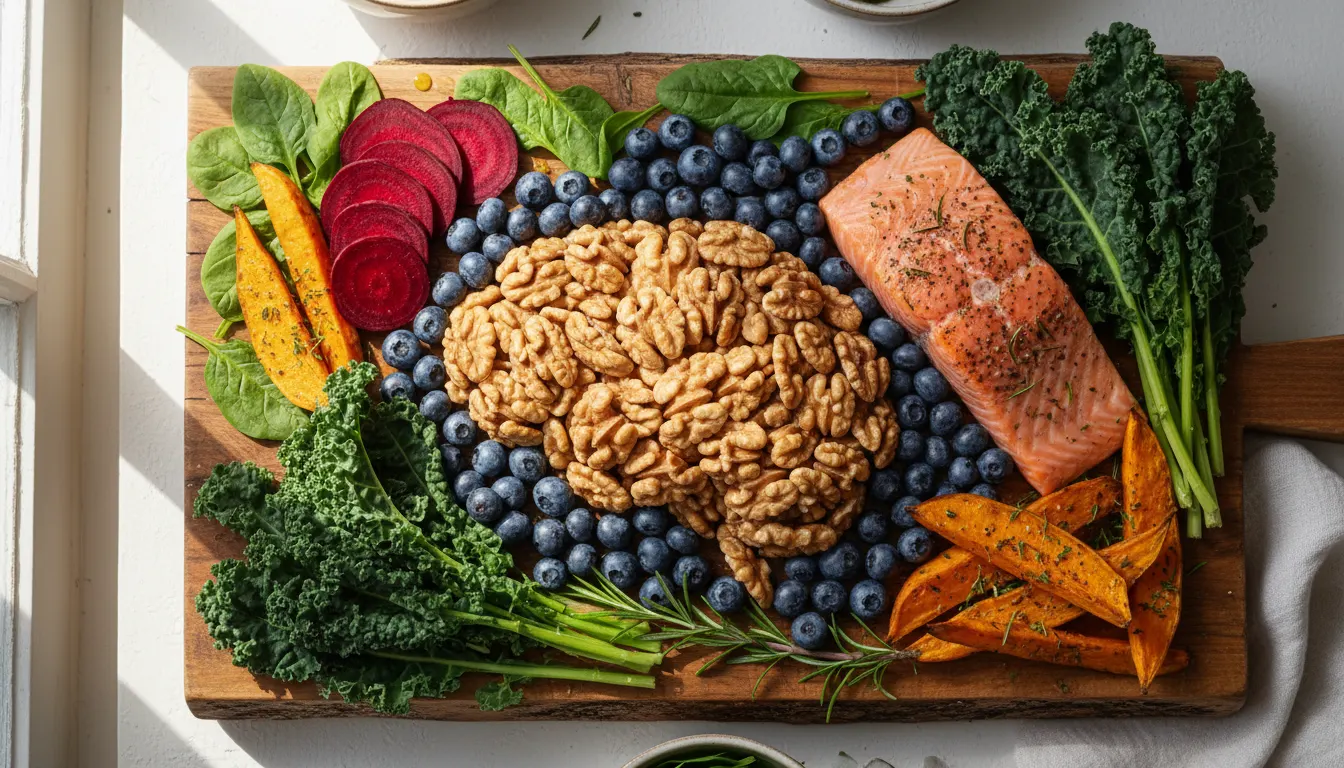
The Mediterranean diet and its derivatives (MIND diet, DASH diet) consistently appear in cognitive research as protective patterns. Key elements include: abundant vegetables and leafy greens, regular consumption of fatty fish rich in omega-3s, berries high in flavonoid antioxidants, nuts and seeds, olive oil, and limiting ultra-processed foods, refined sugars, and excessive alcohol.
Mental Stimulation Matters
The brain responds to challenge. Learning new skills — particularly those that are genuinely novel and cognitively demanding — promotes neuroplasticity and may help build "cognitive reserve." This concept describes the brain's resilience to age-related changes: people with higher cognitive reserve can often sustain normal functioning even in the face of significant structural changes.
Learning a new language, studying a musical instrument, taking up a complex hobby, or even engaging in active reading and writing are all activities that challenge the brain in meaningful ways. The key word is "novel" — activities you've done for years are less stimulating for neuroplasticity than genuinely new challenges.
Staying Socially Connected
Social isolation is increasingly recognized as a significant risk factor for accelerated cognitive aging. Meaningful social engagement provides cognitive stimulation, emotional regulation, and purpose — all of which appear to protect brain health. Prioritizing relationships, staying engaged with community, and maintaining close friendships aren't luxuries; they're brain health strategies.
Natural Cognitive Support
Beyond lifestyle factors, certain natural ingredients have been studied for their potential to support cognitive health. Bacopa Monnieri has a long history of traditional use for memory support and has been examined in multiple human studies. Lion's Mane Mushroom has attracted research interest for its potential to support nerve growth factor (NGF). Ginkgo Biloba is one of the most studied botanicals for cognitive health, with research exploring its effects on cerebral circulation and cognitive function.*
These ingredients, when combined with a brain-healthy lifestyle, form a comprehensive approach to cognitive wellness. Products like MemoHoney® combine several of these researched botanicals into a single convenient daily supplement.*
*These statements have not been evaluated by the Food and Drug Administration. Dietary supplements are not intended to diagnose, treat, cure, or prevent any disease. Consult your healthcare provider before starting any new supplement.
Support Your Memory With MemoHoney®
Formulated with Bacopa Monnieri, Lion's Mane, Ginkgo Biloba, and more — MemoHoney supports healthy memory, focus, and mental clarity every day.*
Claim Your MemoHoney Supply