What you eat doesn't just fuel your body — it directly shapes how your brain functions. The trillions of chemical reactions happening in your brain every second depend on a constant supply of nutrients: fatty acids for neural membranes, antioxidants to protect against oxidative stress, B vitamins for neurotransmitter production, and glucose for energy. Get the balance right, and your brain rewards you with sharper memory, cleaner focus, and more resilient thinking. Get it consistently wrong, and the effects compound quietly over time.
The good news: the foods with the strongest research backing for brain health are not exotic, expensive, or hard to find. Most are readily available at any grocery store. Here are the top brain foods the research consistently points to.
The Food–Brain Connection
The relationship between diet and brain health is mediated through several pathways: direct supply of essential nutrients (like omega-3 fatty acids and B vitamins), reduction of oxidative stress through antioxidants, modulation of inflammation, support of cerebral blood flow, and — increasingly recognized — the influence of the gut microbiome on brain function via the gut-brain axis.
No single food functions as a magic bullet. What matters most is the overall dietary pattern. The Mediterranean diet and the MIND (Mediterranean-DASH Intervention for Neurodegenerative Delay) diet have the strongest observational evidence linking dietary patterns to better long-term brain health outcomes. What these patterns share: abundant plant foods, healthy fats, quality protein, and limited ultra-processed foods and refined sugars.
Fatty Fish & Omega-3s
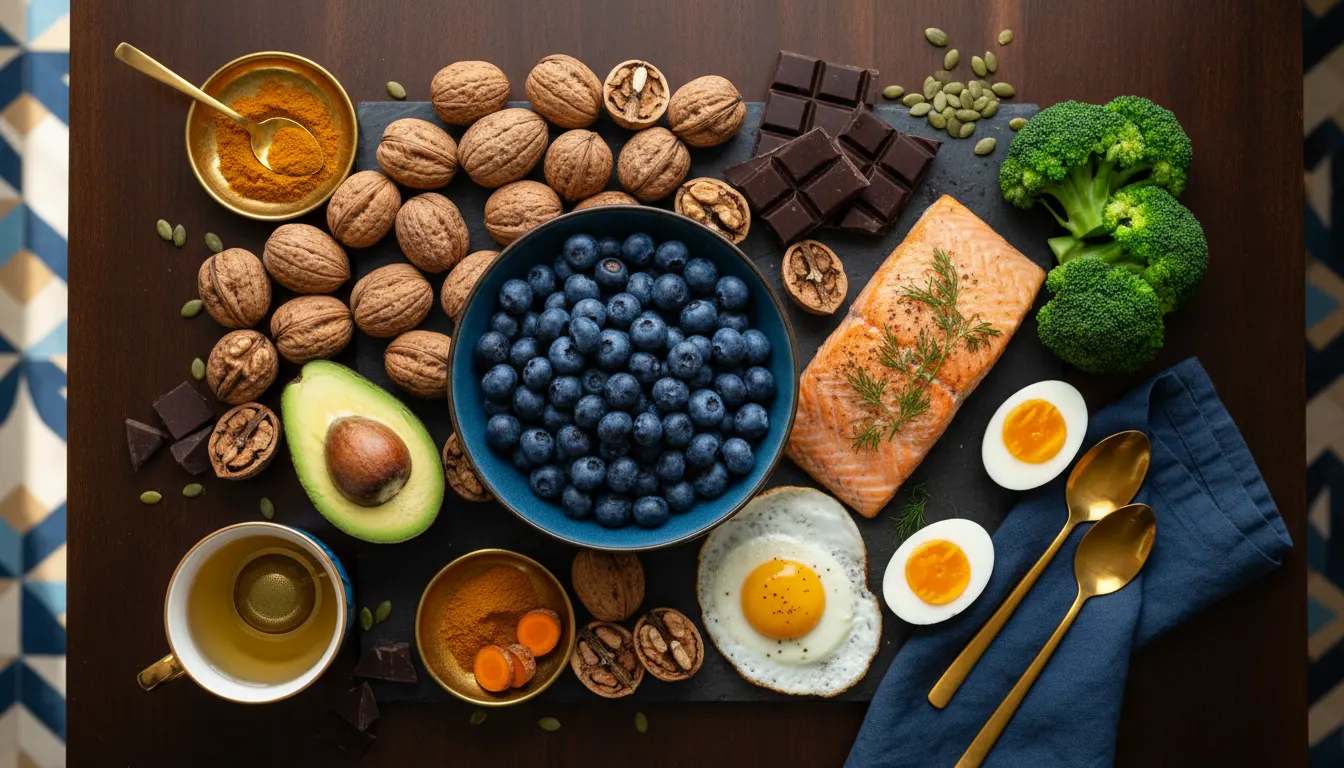
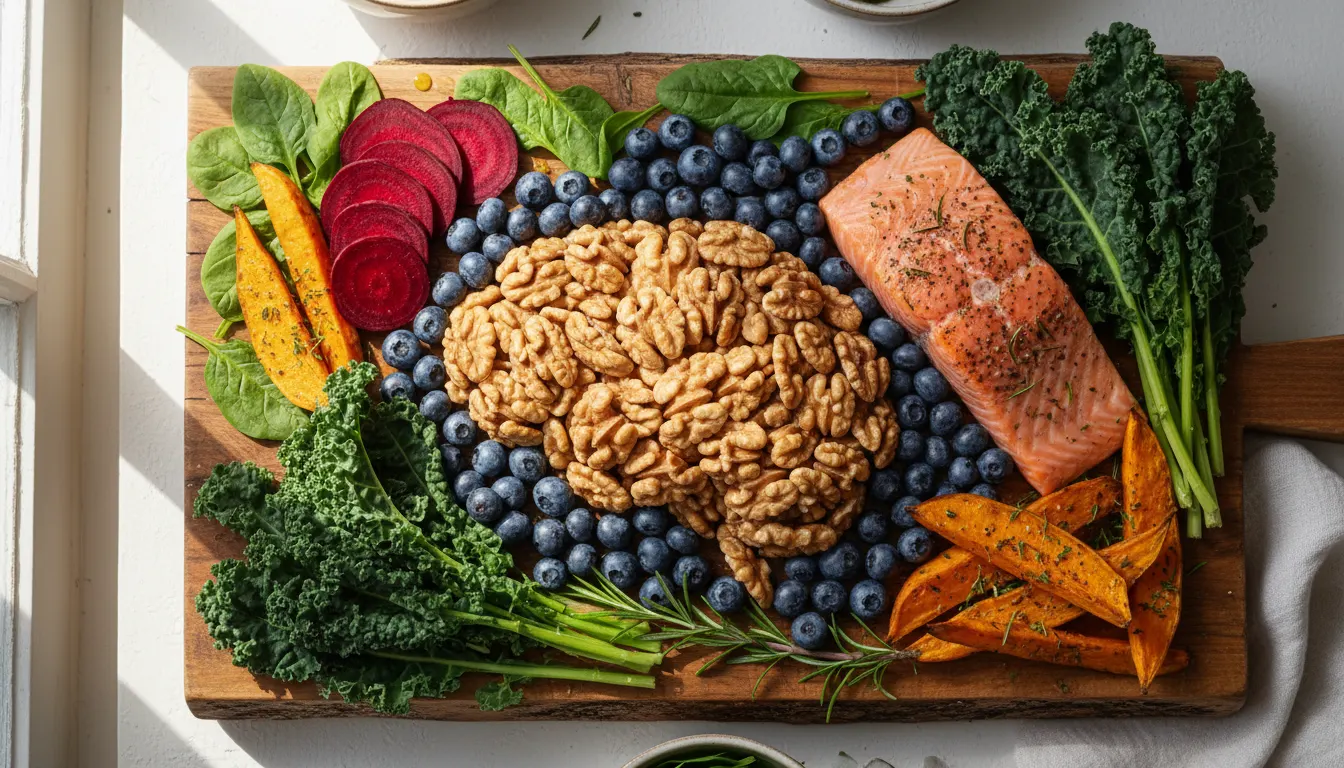
If there's one food category most consistently associated with brain health in the research, it's fatty fish. Salmon, sardines, mackerel, herring, and trout are rich in two forms of omega-3 fatty acids — DHA (docosahexaenoic acid) and EPA (eicosapentaenoic acid) — that are essential for brain structure and function.
DHA is a structural component of the brain itself — it makes up a significant portion of the fatty acid content of neuronal cell membranes. Low DHA intake is associated with accelerated brain aging and impaired cognitive performance. EPA has potent anti-inflammatory properties that support a healthy brain environment. Research has found that regular fish consumption is associated with larger brain volume in aging adults, and greater gray matter volume in regions associated with memory and learning.
Aim for two servings of fatty fish per week. If fish isn't part of your diet, algae-based omega-3 supplements provide plant-derived DHA and EPA.
Blueberries and Dark Berries
Berries — especially blueberries, strawberries, blackberries, and cherries — are packed with flavonoids, particularly a subclass called anthocyanins, which give them their deep blue, red, and purple colors. These compounds cross the blood-brain barrier and accumulate in brain regions involved in memory, learning, and decision-making.
Human studies have found that regular blueberry consumption is associated with improved memory performance in older adults. The proposed mechanisms include increased blood flow to the brain, reduction of neuroinflammation, and support of neural signaling pathways involved in learning. Even frozen berries retain most of their flavonoid content — making year-round consumption practical.
Leafy Green Vegetables
Leafy greens are among the most consistently highlighted foods in cognitive aging research. Kale, spinach, collard greens, and Swiss chard are rich in vitamin K, lutein, folate, and beta-carotene — nutrients all associated with slower cognitive decline in observational studies.
In the MIND diet — which was specifically designed to reduce dementia risk — leafy green vegetables have their own dedicated category (separate from other vegetables), reflecting their uniquely strong association with cognitive health outcomes. Eating one to two servings of leafy greens daily is one of the most reliable dietary habits for long-term brain health.
Nuts — Especially Walnuts
Nuts are nutritionally dense brain foods, providing healthy fats, vitamin E, antioxidants, and polyphenols. Walnuts stand out among nut varieties — they're uniquely rich in ALA (alpha-linolenic acid), a plant-based omega-3, and contain polyphenols shown to reduce oxidative stress and inflammation in brain tissue.
A large dietary study found that higher walnut consumption was associated with better cognitive performance, including improved concentration and information processing speed, in adults across age groups. A handful of mixed nuts daily — including walnuts, almonds, and Brazil nuts — makes an excellent brain-healthy snack.
Dark Chocolate (In Moderation)
Good news for chocolate lovers: dark chocolate (70% cacao or higher) contains flavonoids, caffeine, and theobromine that support brain function. The flavonoids in dark chocolate may stimulate neuroplasticity, improve blood flow to the brain, and provide antioxidant protection against oxidative stress.
Research has found short-term improvements in cognitive performance following dark chocolate consumption, likely due to its combined effect on cerebral blood flow and stimulant compounds. One to two small squares of high-quality dark chocolate daily — ideally with as little added sugar as possible — provides cognitive benefit without excessive calories.
Eggs and Choline
Eggs are one of the richest dietary sources of choline, a nutrient that's essential for the production of acetylcholine — a key neurotransmitter involved in memory, learning, and attention. Many people don't consume adequate choline through their diet, as it's found in relatively few foods in significant quantities.
Research has linked higher dietary choline intake to better verbal and visual memory in adults. Eggs also provide B vitamins (B12, B6, and folate) that support homocysteine metabolism — elevated homocysteine is associated with cognitive decline. Two to three eggs per week as part of a balanced diet provide meaningful choline for brain support.
Avocados for Healthy Fats
Avocados are rich in oleic acid (a monounsaturated fat also found in olive oil), folate, and vitamin K — all nutrients that support brain health. The monounsaturated fats in avocados support healthy blood flow, which is essential for delivering oxygen and nutrients to brain tissue.
A clinical study found that daily avocado consumption improved sustained attention and working memory in healthy adults compared to a comparison group, with brain scan data suggesting improved neural efficiency. Adding half an avocado to meals or snacks several times per week is a delicious way to support cognitive performance.
Turmeric and Curcumin
Turmeric contains curcumin, a polyphenol compound that has attracted significant scientific attention for its potential neuroprotective properties. Curcumin can cross the blood-brain barrier and has demonstrated antioxidant and anti-inflammatory activity in preclinical research.
Human studies have found that curcumin supplementation was associated with improved attention and working memory in non-demented adults, with brain imaging showing decreased markers of amyloid and tau protein accumulation in regions associated with memory. Adding turmeric to cooking — especially with black pepper, which enhances curcumin absorption — is an easy way to incorporate it into your daily diet.
Raw Honey and Polyphenols
Raw honey contains a rich array of polyphenols, flavonoids, and antioxidants not found in refined sugars. Traditional wellness practices in multiple cultures have long attributed cognitive-supportive properties to honey. Modern research has begun to explore whether honey's polyphenol content may support antioxidant protection in brain tissue.*
Unlike processed sugar — which causes sharp glucose spikes and crashes that impair cognitive performance — the natural sugars in raw honey are accompanied by compounds that may moderate their metabolic impact. In small amounts, raw honey is a preferred alternative to refined sweeteners for those seeking to support cognitive wellness. This principle inspired the "Honey" in MemoHoney® — the inclusion of a raw honey complex alongside researched botanical ingredients.*
*These statements have not been evaluated by the Food and Drug Administration. This product is not intended to diagnose, treat, cure, or prevent any disease.
Combine Great Nutrition With MemoHoney®
A premium daily supplement with Bacopa Monnieri, Lion's Mane, Ginkgo Biloba, and a Raw Honey Complex — designed to complement a brain-healthy diet.*
Claim Your MemoHoney Supply