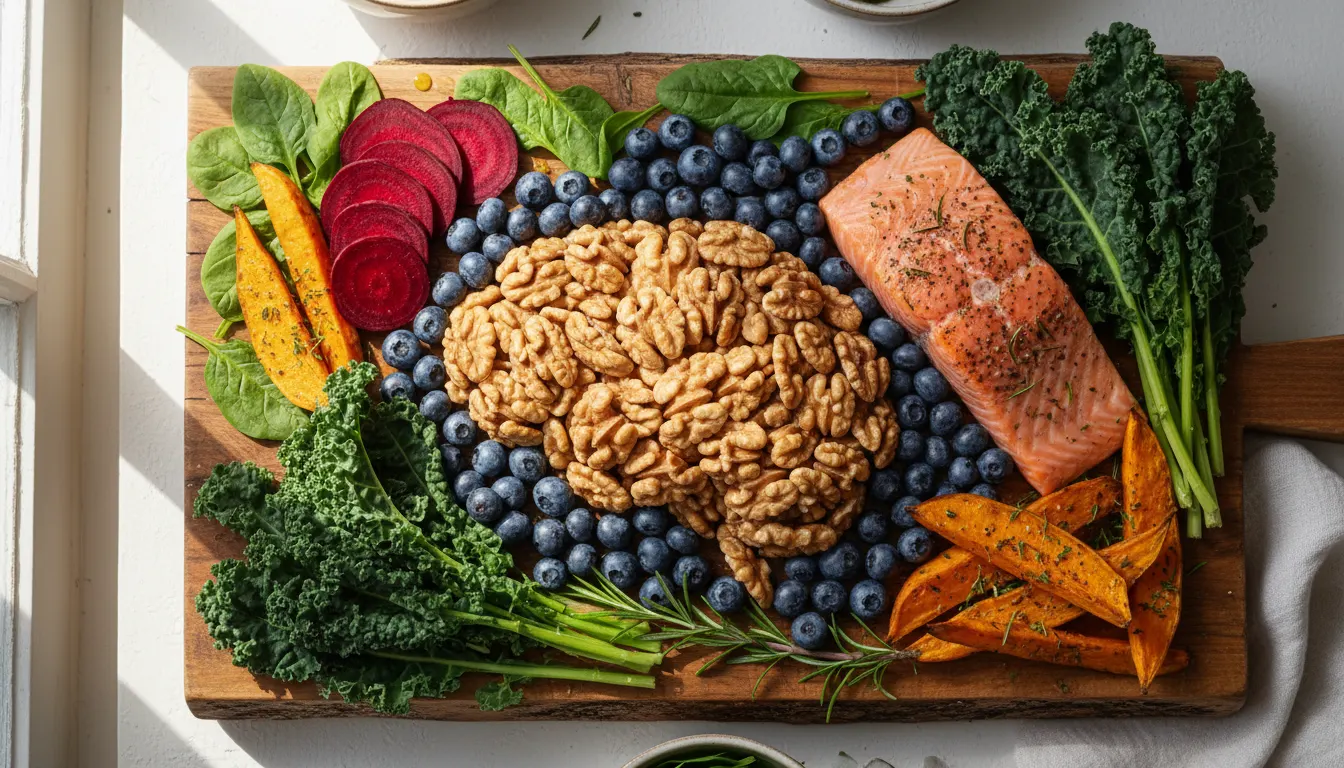
- The Long-Term View: Diet as Brain Investment
- The MIND Diet: Built for Brain Health
- Omega-3-Rich Foods: Essential for Neural Structure
- Flavonoid-Rich Berries
- Leafy Greens: The MIND Diet's Top Priority
- Nuts and Seeds
- Extra Virgin Olive Oil
- Fermented Foods and the Gut-Brain Axis
- What to Limit for Brain Health
- Complementing Diet With Targeted Support
- Frequently Asked Questions
Every meal is, in a very real sense, a long-term investment in your brain. The nutrients you consistently eat over months and years shape the architecture of your neural membranes, fuel neurotransmitter production, govern the quality of blood flow to your brain, and set the inflammatory environment in which your neurons operate. These are not abstract concerns — they translate directly into how clear-headed you feel today and how well your cognitive function holds up over the decades ahead.
The research on diet and long-term brain health has matured considerably over the past two decades. We now have large observational studies, intervention trials, and neuroimaging research pointing clearly toward specific dietary patterns and food categories that consistently produce better cognitive aging outcomes. Here is what the best available evidence shows.
The Long-Term View: Diet as Brain Investment
No single meal and no single superfood will transform your cognitive function overnight. Brain health — like cardiovascular health — is the cumulative product of dietary patterns sustained over years. This has a cautionary dimension: chronic dietary neglect compounds silently. But it also carries genuine encouragement: meaningful dietary improvements made at any age can produce measurable cognitive benefits over time.
The dietary patterns with the strongest evidence for long-term cognitive health share clear characteristics. They are abundant in diverse plant foods. They emphasize quality fats — particularly monounsaturated and omega-3 polyunsaturated fats — over trans and saturated fats. They provide moderate, high-quality protein. And they are conspicuously low in ultra-processed foods, refined carbohydrates, and added sugars. No single food covers the full nutritional landscape the brain requires. The goal is a consistently diverse, whole-food dietary pattern — not perfection, but sustained, predominantly whole-food eating over years.
The MIND Diet: Built Specifically for Brain Health
The MIND diet — Mediterranean-DASH Intervention for Neurodegenerative Delay — stands apart in brain health research because it was designed explicitly to reduce dementia risk. Developed by Dr. Martha Clare Morris at Rush University Medical Center, it was constructed by identifying which specific elements of the Mediterranean and DASH diets most strongly predicted cognitive outcomes in large population studies.
The MIND diet emphasizes 10 brain-healthy food groups:
- Leafy green vegetables — at least 6 servings per week
- Other vegetables — at least 1 serving per day
- Berries — at least 2 servings per week
- Nuts — at least 5 servings per week
- Olive oil — as primary cooking fat
- Whole grains — at least 3 servings per day
- Fish — at least 1 serving per week
- Beans — at least 4 meals per week
- Poultry — at least 2 servings per week
- Wine — at most 1 glass per day (optional)
And recommends limiting 5 food categories: red meat, butter and margarine, cheese, pastries and sweets, and fried or fast food.
In the landmark Rush Memory and Aging Project, participants with the highest MIND diet adherence showed cognitive function equivalent to someone approximately 7.5 years younger than those with the lowest adherence. Crucially, even moderate adherence — not perfect compliance — was associated with meaningful cognitive benefit. Consistency over time, not rigid perfection, drives the long-term dividend.
"The MIND diet is the first dietary pattern specifically constructed for brain health — and the evidence supporting it is among the strongest for any dietary intervention and cognition."
Omega-3-Rich Foods: Essential for Neural Structure
Omega-3 fatty acids — specifically DHA (docosahexaenoic acid) and EPA (eicosapentaenoic acid) — are structural components of neuronal cell membranes and among the most critically important dietary fats for brain function. DHA makes up a substantial fraction of the brain's total fatty acid content. Adequate DHA intake is associated with maintained brain volume, better memory performance, and measurably slower cognitive aging in multiple large studies.
The richest dietary sources are fatty fish: salmon, mackerel, sardines, herring, and trout provide both DHA and EPA in their most bioavailable forms. Aim for at least two servings per week. For those who do not eat fish, algae-based omega-3 supplements provide DHA and EPA in the same forms — fish are rich in these fats because they consume DHA-rich algae. Plant sources (walnuts, flaxseed, chia seeds) provide ALA, which converts to DHA and EPA at limited efficiency and should complement, not replace, direct DHA and EPA sources.
Flavonoid-Rich Berries
Berries receive their own dedicated category in the MIND diet — and the research supporting this is compelling. Blueberries, strawberries, raspberries, blackberries, and tart cherries are rich in anthocyanins and other flavonoids that cross the blood-brain barrier and accumulate preferentially in brain regions involved in learning and memory, including the hippocampus and prefrontal cortex.
Long-term observational data from the Nurses' Health Study — tracking over 16,000 women across two decades — found that higher berry consumption was associated with a delay in cognitive aging of up to 2.5 years compared to the lowest consumers. Intervention studies have found improvements in memory performance and better preservation of cognitive function in older adults consuming regular blueberry supplementation. Frozen berries retain the majority of their flavonoid content, making year-round, affordable daily consumption entirely practical. Two servings per week is the MIND diet minimum — daily inclusion is even better.
Leafy Greens: The MIND Diet's Top Priority
Leafy greens receive the highest recommended weekly frequency of any food group in the MIND diet, reflecting particularly strong and consistent evidence. Kale, spinach, collard greens, Swiss chard, arugula, and romaine lettuce are rich in vitamin K, lutein, folate, and beta-carotene — all associated with measurably slower cognitive decline in research.
A study published in Neurology drawing on Rush Memory and Aging Project data found that people eating one to two servings of leafy greens daily had cognitive abilities equivalent to someone approximately 11 years younger than those who rarely ate them. Vitamin K appears to play a particularly important role, potentially supporting myelin health and the efficiency of neural signal transmission throughout the brain. A single daily serving — in a salad, sautéed as a side, or blended into a smoothie — can make a meaningful cumulative difference over time.
Nuts and Seeds
Nuts are some of the most nutritionally dense brain foods available. They provide a combination of monounsaturated and polyunsaturated fats, vitamin E (a potent fat-soluble antioxidant associated with reduced cognitive decline risk), magnesium, plant-based protein, and polyphenols in a convenient, shelf-stable format. Walnuts are particularly noteworthy — uniquely rich in ALA omega-3 and polyphenols shown to reduce oxidative stress in brain tissue.
Research from UCLA found that adults who regularly consumed walnuts performed better on cognitive tests — including memory, concentration, and processing speed — across all age groups, independent of other demographic factors. Almonds contribute vitamin E and magnesium; Brazil nuts provide selenium (critical for antioxidant enzyme function); pistachios offer lutein and zeaxanthin. A daily handful (28–30 grams) of mixed nuts five or more times per week meets MIND diet recommendations and covers a broad cognitive nutritional profile.
Extra Virgin Olive Oil
Extra virgin olive oil (EVOO) is the designated primary cooking fat in the Mediterranean and MIND diets — and for well-founded reasons. It is exceptionally rich in oleocanthal (a natural phenolic anti-inflammatory compound), polyphenols, and oleic acid (a monounsaturated fat that supports healthy cell membrane fluidity). This combination gives EVOO a distinctive neuroprotective profile not replicated by other cooking fats.
The landmark PREDIMED trial — one of the largest nutrition intervention studies ever conducted — found that participants assigned to a Mediterranean diet supplemented with extra virgin olive oil had significantly better cognitive scores and lower rates of mild cognitive impairment after approximately five years compared to controls on a low-fat diet. Use EVOO as your primary cooking fat for sautéing and roasting, and as the base for salad dressings. Select cold-pressed, certified extra virgin varieties in dark glass bottles to preserve polyphenol integrity.
Fermented Foods and the Gut-Brain Axis
One of the most consequential developments in nutritional neuroscience in recent years is the growing understanding of the gut-brain axis — the bidirectional communication network linking the gut microbiome to the brain through neural, hormonal, and immune pathways. A diverse, healthy gut microbiome influences brain health through multiple mechanisms: production of short-chain fatty acids that support the blood-brain barrier, regulation of neuroinflammation, and synthesis of neurotransmitter precursors including serotonin, GABA, and dopamine precursors.
Fermented foods — including yogurt, kefir, kimchi, sauerkraut, miso, tempeh, and kombucha — deliver live beneficial microorganisms and fermentation byproducts that support gut microbiome diversity. A 2021 Stanford randomized controlled trial found that a high-fermented-food diet significantly increased microbiome diversity and reduced systemic inflammatory markers compared to a high-fiber diet alone over 10 weeks. Since chronic neuroinflammation is increasingly recognized as a contributor to cognitive decline, supporting gut health through fermented foods is a meaningful indirect brain health strategy.
Aim to include one to two servings of fermented foods daily. A cup of plain yogurt with berries at breakfast, a serving of kimchi alongside lunch, or kefir as a snack are all practical, delicious ways to support gut-brain health consistently.
What to Limit for Brain Health
A brain-healthy diet is defined as much by what you consistently limit as by what you include. The following food categories have the strongest negative associations with long-term cognitive outcomes:
- Ultra-processed foods: High in refined carbohydrates, artificial additives, industrial seed oils, and sodium — ultra-processed foods promote systemic inflammation, dysregulate blood glucose, and displace the nutrient-dense foods the brain needs. A large 2022 JAMA Neurology study found each 10% increase in ultra-processed food consumption was associated with a 16% faster rate of cognitive decline.
- Added sugars and sweetened beverages: Frequent blood glucose spikes impair insulin signaling in the brain, promote neuroinflammation, and are associated with accelerated hippocampal atrophy over time. Sugary drinks are among the most cognitively harmful common foods because they deliver high glucose loads with no accompanying fiber, protein, or micronutrients to moderate their impact.
- Trans fats: Though partially hydrogenated oils have been broadly removed from food supplies in many countries, residual trans fats remain in some processed products. Research has associated trans fat consumption with impaired memory performance and smaller brain volumes.
- Chronic heavy alcohol: Sustained heavy drinking causes direct neuronal damage, severely disrupts sleep architecture (thereby impairing nightly memory consolidation), and is robustly associated with accelerated brain aging and elevated dementia risk.
- High-sodium processed foods: Excess sodium promotes hypertension and impaired cerebrovascular function, reducing the quality and consistency of blood flow the brain depends on for optimal performance and metabolic waste clearance.
Complementing Your Diet With Targeted Nutritional Support
Even the most thoughtfully constructed diet can leave nutritional gaps — particularly for brain-specific nutrients like DHA, choline, and certain B vitamins that are difficult to obtain in meaningful quantities from modern diets. And for certain botanical compounds with promising research behind them — Bacopa Monnieri, Lion's Mane Mushroom, Ginkgo Biloba, Phosphatidylserine, and Huperzine A — food sources simply are not practically available.
This is where a well-formulated daily supplement serves a complementary role, filling the gaps that even a brain-healthy whole-food diet may leave. MemoHoney® was designed with this exactly in mind — combining eight researched botanical and nutritional ingredients into a single, convenient daily capsule, designed to work alongside the dietary foundations described throughout this article.*
The most powerful cognitive wellness strategy available is a diet-first approach — building the whole-food foundations that this article describes — supported by targeted nutritional supplementation where dietary sources fall meaningfully short. Neither approach alone is as effective as both combined, practiced consistently over time.
*These statements have not been evaluated by the Food and Drug Administration. This product is not intended to diagnose, treat, cure, or prevent any disease. Consult your healthcare provider before starting any new supplement.
Pair Great Nutrition With MemoHoney®
Bacopa Monnieri, Lion's Mane, Ginkgo Biloba, Vitamin B12 and more — a premium daily formula designed to complement your brain-healthy diet and support memory, focus, and mental clarity every day.*
Claim Your MemoHoney Supply