- Why Natural Approaches Matter
- 1. Prioritize Sleep Above Everything
- 2. Regular Aerobic Exercise
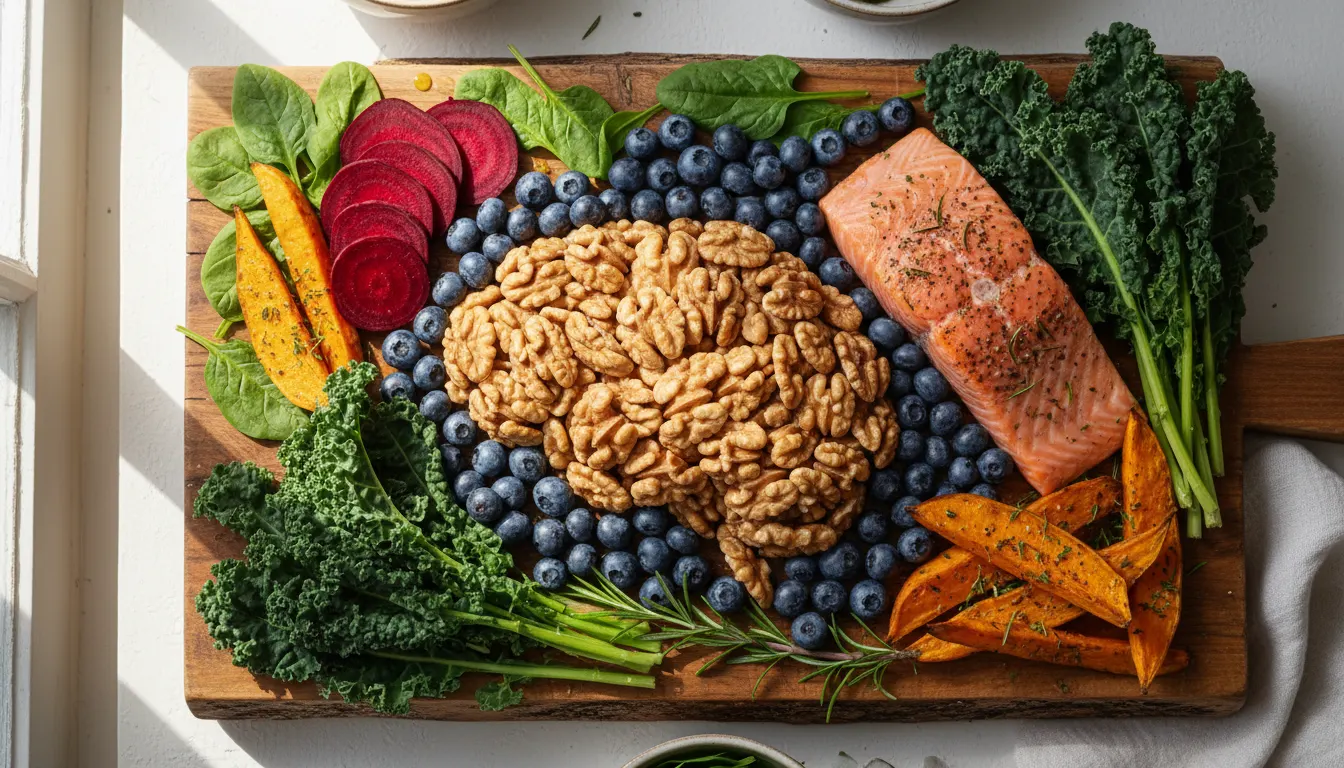
- 3. A Mediterranean-Style Diet
- 4. Lifelong Mental Challenge
- 5. Social Engagement
- 6. Limit Alcohol and Avoid Smoking
- 7. Manage Cardiovascular Health
- 8. Use Active Memory Techniques
- 9. Research-Backed Botanical Support
- Frequently Asked Questions
There's understandable appeal in the idea of a pill, protocol, or product that delivers dramatic cognitive improvement with minimal effort. The reality of memory support is more nuanced — and more encouraging. The interventions with the strongest, most consistent evidence behind them are not pharmaceutical or exotic. They are natural, accessible, and often the same practices that support overall health. The difference is that cognitive science now gives us a clearer picture of precisely how and why they work — and that understanding can motivate the kind of sustained, consistent application that produces real results.
This guide covers the natural strategies with the best evidence for supporting memory and cognitive performance, from fundamental lifestyle practices to botanical ingredients that have been studied for their potential neurological effects.
Why Natural Approaches Matter
The brain is a biological organ that responds to the conditions of its environment. The quality of sleep you get, the food you eat, how much you move, what you challenge your mind with, and how you manage stress are not peripheral lifestyle factors — they are the primary determinants of how the brain functions and how it ages.
Natural approaches work because they address the foundational conditions the brain needs to function well: adequate rest for consolidation, physical activity for circulation and neuroplasticity, nutrients for structure and neurotransmitter production, mental challenge for maintaining synaptic density, and social engagement for cognitive stimulation. No single supplement, however well-formulated, can fully substitute for these foundations.
1. Prioritize Sleep Above Everything
Sleep is not passive rest — it is the brain's primary maintenance window. During slow-wave (deep) sleep, the hippocampus replays the day's experiences and transfers newly encoded memories into durable long-term storage throughout the cortex. During REM sleep, emotional memories are processed, and the brain creates novel connections between previously unrelated information.
Research consistently shows that sleep deprivation — even mild and chronic — significantly impairs both the formation of new memories and the retrieval of existing ones. Adults who sleep fewer than 6 hours per night on a regular basis show measurably worse performance on memory and cognitive tasks compared to those sleeping 7–9 hours.
Practical sleep hygiene: maintain consistent sleep and wake times seven days a week, keep the bedroom cool and dark, avoid screens for 60–90 minutes before bed, and limit caffeine after 2 PM. These simple measures protect the biological conditions your memory depends on.
2. Regular Aerobic Exercise
Physical exercise is the most robustly evidence-supported lifestyle intervention for brain health — period. Aerobic exercise increases cerebral blood flow, raises brain-derived neurotrophic factor (BDNF), promotes hippocampal neurogenesis, reduces cortisol, improves sleep quality, and has been repeatedly associated with larger hippocampal volume and better memory performance in adults of all ages.
The target is modest: 150 minutes of moderate aerobic activity per week — brisk walking, cycling, swimming, dancing — broken into manageable daily sessions. People who establish and maintain this habit over years show significantly slower rates of age-related cognitive decline than their sedentary peers. Starting at any age produces benefits; it is never too late.
3. A Mediterranean-Style Diet
Diet quality has a powerful cumulative effect on brain health. The Mediterranean dietary pattern — rich in vegetables, fruits, whole grains, legumes, fatty fish, nuts, and extra-virgin olive oil, with limited processed foods and red meat — has the strongest observational evidence linking dietary patterns to better cognitive aging outcomes.
The MIND diet (Mediterranean-DASH Intervention for Neurodegenerative Delay), developed specifically to reduce dementia risk, highlights leafy greens, berries, nuts, whole grains, fish, beans, poultry, olive oil, and wine in moderation as highest-priority brain foods. Consistently following this pattern over years — not perfect adherence, but consistent practice — is associated with meaningfully lower rates of cognitive decline. See also our detailed article on top brain foods for memory and focus.
4. Lifelong Mental Challenge
The concept of "cognitive reserve" — the brain's resilience against age-related changes, built through a lifetime of mental engagement — is one of the most compelling findings in cognitive aging research. People with higher cognitive reserve can sustain normal functioning even in the face of significant structural brain changes that would be debilitating in a brain with less reserve.
Cognitive reserve is built through genuinely novel intellectual challenge: learning a language, studying a musical instrument, engaging with complex reading and writing, pursuing challenging hobbies, and maintaining intellectual curiosity throughout life. The key is novelty and appropriate difficulty — activities that are too familiar or too easy no longer drive meaningful neuroplastic adaptation.
5. Social Engagement
Social isolation is one of the most consistently identified risk factors for accelerated cognitive decline. Meaningful social engagement provides multidimensional cognitive stimulation — conversation requires attention, comprehension, memory retrieval, emotional regulation, and rapid perspective-taking — while also providing emotional support and a sense of purpose that are independently protective for brain health.
Research has found that socially active older adults show slower cognitive decline, lower dementia rates, and better overall quality of life compared to their more isolated peers. Maintaining close friendships, participating in community groups, staying engaged with family, and seeking genuine connection are not just quality-of-life priorities — they are brain health strategies.
6. Limit Alcohol and Avoid Smoking
Chronic heavy alcohol use is unambiguously damaging to brain structure and function, reducing hippocampal volume, impairing neurogenesis, and interfering with memory consolidation. Even moderate alcohol consumption has increasingly complex evidence, with some research suggesting it disrupts sleep architecture in ways that impair nightly memory consolidation even at lower quantities.
Cigarette smoking is associated with accelerated brain aging, reduced gray matter volume, and higher dementia risk through multiple mechanisms — including vascular damage that impairs cerebral blood flow. Quitting smoking at any age produces measurable cognitive benefits over time, as the brain's natural plasticity allows partial recovery from the accumulated damage.
7. Manage Cardiovascular Health
The brain is one of the most vascularly demanding organs in the body, consuming 20% of the heart's output despite representing only 2% of body weight. Conditions that impair vascular health — high blood pressure, elevated blood glucose, high LDL cholesterol, and obesity — directly impair cerebral blood flow and accelerate cognitive aging.
Managing these risk factors through diet, exercise, and appropriate medical care is not just heart health — it's one of the most powerful and under-appreciated brain health interventions available. The brain that receives optimal blood flow consistently performs better, ages more slowly, and retains more resilience against decline.
8. Use Active Memory Techniques
Memory is a skill, and it responds to deliberate practice and strategic techniques. Several evidence-based methods significantly improve memory performance compared to passive review:
- Spaced repetition: Reviewing material at increasing intervals over time (rather than massing all review into a single session) dramatically improves long-term retention. This exploits the spacing effect, one of the most robust findings in memory research.
- Active recall: Testing yourself on material (rather than re-reading) forces retrieval practice, which strengthens the memory trace more effectively than passive review.
- The Method of Loci: Associating information with physical locations on a familiar mental journey leverages the brain's powerful spatial memory system. Used by memory competitors to memorize extraordinary amounts of information.
- Elaborative encoding: Connecting new information to what you already know — asking "why?" and "how does this relate to X?" — embeds information in richer associative networks that make retrieval more robust.
9. Research-Backed Botanical Support
Alongside foundational lifestyle strategies, certain botanical ingredients have been studied in human clinical trials for their potential effects on memory and cognitive performance. These are not replacements for lifestyle foundations — they work most effectively as complements to them:
- Bacopa Monnieri: Used in Ayurvedic practice for centuries for memory and learning support. Multiple human studies have examined Bacopa for its effects on memory recall and cognitive processing speed. Results suggest benefits with 8–12 weeks of consistent use.*
- Lion's Mane Mushroom: Has attracted research interest for its potential to support nerve growth factor (NGF) production, which is involved in the maintenance and growth of neurons.*
- Ginkgo Biloba: One of the most studied botanicals for cognitive health, with research examining its effects on cerebral circulation and cognitive function in aging adults.*
- Phosphatidylserine: A phospholipid component of neuronal membranes, studied for its role in supporting memory and cognitive function, particularly with age.*
- Ashwagandha: An adaptogenic root studied for stress modulation and its potential to support cognitive performance under everyday stress conditions.*
MemoHoney® combines all five of these researched ingredients alongside Huperzine A, Vitamin B12, and a Raw Honey Complex — a comprehensive daily formula designed to support the brain's natural capacity for healthy memory, focus, and mental clarity.*
*These statements have not been evaluated by the Food and Drug Administration. This product is not intended to diagnose, treat, cure, or prevent any disease. Consult your healthcare provider before starting any new supplement.
Complete Your Natural Memory Support Routine
MemoHoney® combines 8 researched natural ingredients — Bacopa Monnieri, Lion's Mane, Ginkgo Biloba, and more — to complement your brain-healthy lifestyle.*
Claim Your MemoHoney Supply